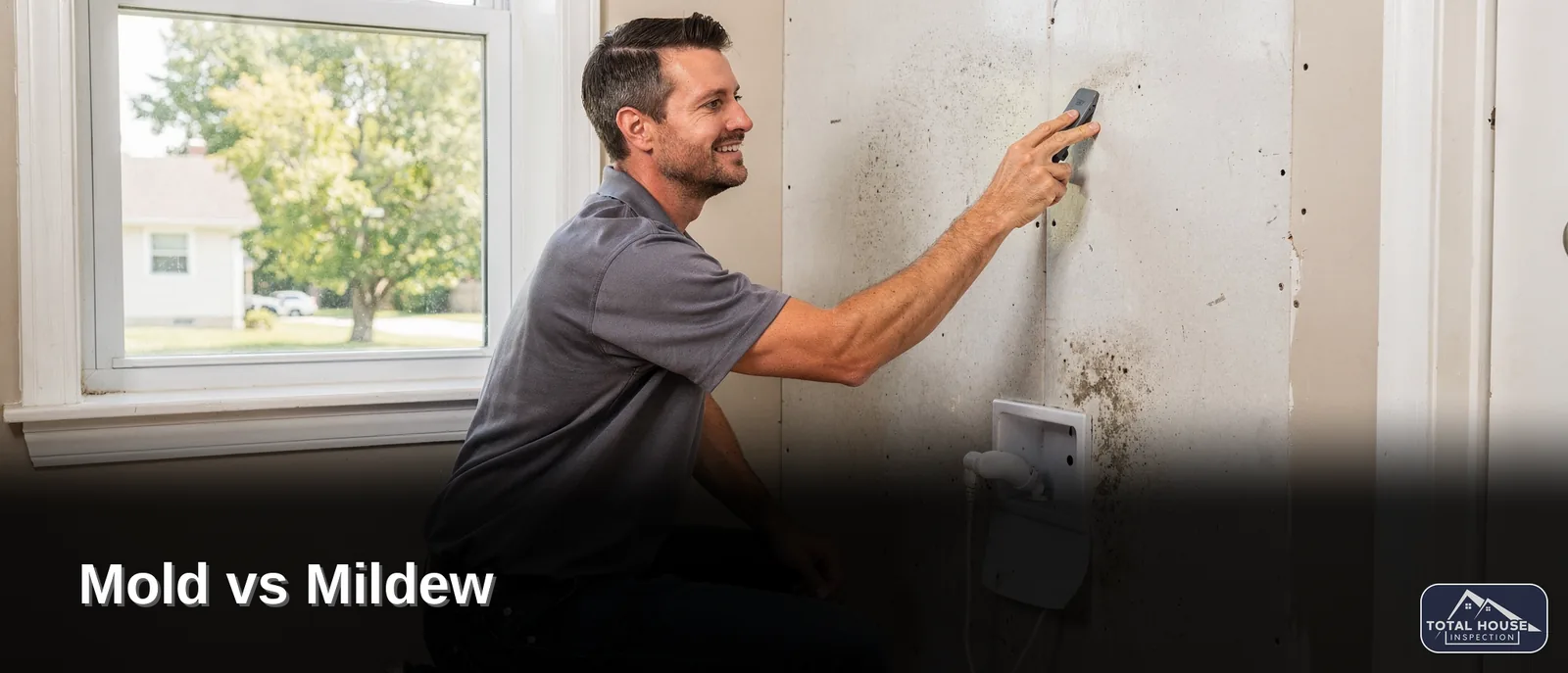
Mildew stays surface-level, growing apartment and gray or white on damp Michigan surfaces. Mold penetrates deeper, causing structural and health risks. Total House Inspection identifies both during inspections across Southeast and Mid-Michigan, using NAMP & IAC2 certified methods and delivering lab results within one to three days for accurate, actionable findings.
Key Takeaways
Mold and mildew are distinct fungi requiring different inspection and remediation approaches for homeowner protection.
Total House Inspection Inc. completes a wide selection of inspections with certified lab results in 1–3 days.
Michigan’s damp climate creates ideal conditions for mold growth in basements, bathrooms, and crawl spaces.
Professional mold testing identifies hidden contamination that visual inspection alone cannot detect or assess accurately.
What's the Real Difference Between Mold and Mildew?
Surface depth separates these two fungi, not appearance alone. Mildew stays on top of a surface, while mold digs into the material beneath it. That distinction shapes everything we look for during a mold vs mildew home inspection across Southeast Michigan properties.
We treat this distinction as more than technical trivia. Recognizing the difference protects homeowners from health risks and structural damage that stay hidden behind drywall, under flooring, or above ceiling tiles. Mildew typically causes a surface-level nuisance, easy to wipe away and rarely a threat to the building itself. Mold behaves differently. It penetrates wood, drywall, and insulation, creating deeper problems that affect both the structure and the people living inside it.
Mold and mildew rank among the most common findings we encounter during property inspections, and homeowners confuse the two constantly. That confusion carries consequences. Treating a mold colony like simple mildew delays the moisture investigation a home actually needs.
How do inspectors tell mold and mildew apart?
We look at texture, color, and growth pattern first. Mildew usually appears white, gray, or powdery, while mold shows darker, fuzzier, or slimy characteristics. We also assess how deeply the growth has penetrated the surface material. That determines whether cleaning solves the problem or remediation becomes necessary.
Why does the distinction matter for buyers and sellers?
Correctly identifying each fungus helps buyers negotiate repairs based on actual risk, not guesswork. It also helps sellers address issues before listing. Explaining these differences clearly to clients builds trust and supports healthier, safer homes throughout Southeast Michigan’s real estate transactions.

Why Does Michigan's Climate Fuel Mold Growth?
Cold, snowy winters paired with humid summers keep Michigan buildings under constant moisture pressure. That combination generates year-round conditions favorable to fungal growth in residential and commercial properties across the state. Few regions demand the same level of seasonal vigilance.
Lakes, forests, and heavy snowfall define much of Michigan’s landscape, and that same beauty creates near-perfect breeding conditions for mold. Homes near water or wooded lots face added humidity. Snow cover locks moisture against foundations and rooflines for months at a time. We treat this seasonal pattern as a core factor in every fungal growth evaluation Michigan properties require.
How does the freeze-thaw cycle contribute to mold?
Michigan’s freeze-thaw cycle runs from November through March, and it stresses building envelopes repeatedly during that stretch. Ice dams form along rooflines, forcing meltwater beneath shingles and into attic spaces. That trapped moisture often goes unnoticed until staining or musty odors appear, which is why attic and basement mold inspection work matters most in early spring.
Does understanding the cause make mold easier to fix?
Yes. Most mold problems in Michigan homes resolve once owners understand the underlying moisture source rather than just the visible growth. Identifying that source is also central to any thorough mold vs mildew home inspection. Surface discoloration alone rarely tells the full story.
Michigan’s climate does not create a one-time risk — it creates a recurring cycle:
Winter snow load adds moisture at rooflines and foundations
Spring thaw releases trapped water into attics and basements
Summer humidity sustains growth once moisture is present
We evaluate each stage of that cycle, not just the mold itself.
What Happens During an Attic and Basement Mold Inspection?
An attic and basement mold inspection starts with a search, not a checklist. Moisture drives every finding, since mold requires only a spore, a surface, and water. Water is the one ingredient a homeowner can actually remove. Our inspectors treat the visit as a hunt for that water source, tracing it back to its origin rather than simply photographing dark spots.
We walk the full property first, checking rooflines, insulation, framing, sill plates, and foundation walls for signs of past or active moisture. Where conditions warrant it, we collect air and surface samples and send them to a certified laboratory for analysis. Results come back within days. We translate the lab findings into plain language, paired with photographs of exactly where each sample originated.
Why does the attic matter so much in Michigan?
Michigan winters punish rooflines through repeated freeze-thaw cycles between November and March. Ice dams form along the eaves, forcing meltwater backward under shingles and directly into attic spaces. That trapped moisture soaks insulation and framing, creating conditions for a fungal growth evaluation in Michigan long before any visible staining appears on a ceiling below.
What tips off a basement mold problem?
Basements often announce trouble before anyone sees it. Homeowners describe walking downstairs and catching a musty, damp odor immediately, well before spotting visible growth. That smell signals excess moisture in the space, and our job is locating its source.
A thorough mold vs mildew home inspection distinguishes between:
Surface mildew sitting on a damp basement wall
Deeper fungal colonization inside porous materials like drywall or subfloor
Active moisture intrusion versus residual dampness from a past event
Each distinction changes the remediation path a homeowner needs to pursue.

How Does a Fungal Growth Evaluation Work in Michigan?
A fungal growth evaluation Michigan homeowners can trust follows a structured, documented process from first walkthrough to final report. Our certified inspectors examine visible growth, measure its extent, and follow IAC2 sampling protocols to keep the process consistent across every property we visit statewide. This standardized approach separates a credible evaluation from guesswork based on smell or appearance alone.
We rely on advanced tools to pinpoint moisture sources, humidity patterns, and areas at elevated risk for fungal colonization. Michigan’s older housing stock, combined with basements, crawl spaces, and humid summers, creates conditions where growth often hides behind walls or under flooring. Advanced moisture meters and imaging tools let us find those conditions before they become visible problems.
What Happens After Samples Are Collected?
Air and surface samples travel to a certified laboratory for analysis once we identify locations likely to yield useful results. Lab results typically return within one to three days, giving property owners and real estate professionals a fast turnaround during time-sensitive transactions. Speed matters here; a slow report can stall a closing or leave a buyer negotiating blind.
How Are the Results Explained to Homeowners?
We do not hand over a lab printout and walk away. Findings get translated into plain English, supported by photographs documenting exactly where growth appeared and how extensive it was. This matters most during a mold vs mildew home inspection. The visual difference between a cosmetic surface issue and active fungal colonization changes the recommended next step entirely.
Our process typically includes:
Visual inspection following IAC2 sampling standards
Moisture and humidity assessment using advanced detection tools
Targeted air and surface sampling
Certified lab analysis within one to three days
Plain-English report with supporting photographs
This sequence gives Michigan property owners a documented, defensible answer rather than a hunch.
When Should You Schedule a Mold Inspection?
Musty odors, visible dark spots, or recent water damage signal the right moment for a mold inspection. Waiting carries real cost. Health complaints and structural decay both grow worse the longer moisture sits unaddressed in a Michigan home.
We consider occupant health the clearest warning sign. Mold exposure causes allergies, respiratory problems, headaches, and fatigue, symptoms that often get blamed on seasonal allergies or stress instead. If family members feel better away from home. Worse after returning, we treat that pattern as a reason to test.
Does mold cause damage even before it's visible?
Yes. Left unaddressed, mold weakens walls, ceilings, and floors over time, along with other structural elements hidden behind drywall or under flooring. A fungal growth evaluation Michigan homeowners request early often catches this damage before repair costs climb.
We recommend inspection at these points:
Before purchasing a Southeast Michigan property, especially one with basement or crawlspace moisture history
After any flooding, roof leak, or plumbing failure
When listing a home for sale, to address issues before buyers raise them
During routine ownership, if musty odors persist without a clear source
An attic and basement mold inspection covers the two areas most prone to trapped humidity and poor airflow in Michigan homes. Total House Inspection Inc., based in Troy, MI, provides mold testing across Southeast Michigan properties. Because inspection pricing starts at a base fee that scales with square footage, mold testing can be bundled into a standard home inspection rather than scheduled as a separate visit, giving buyers and sellers one consolidated report.
FAQ
What is the main difference between mold and mildew?
Mildew stays on the surface and grows apartment, gray or white. Mold penetrates deeper into materials, causing structural damage and health risks.
How do home inspectors distinguish mold from mildew?
Inspectors examine texture, color, and growth pattern—mildew appears powdery and light-colored. Mold looks darker, fuzzier, or slimy—and assess how deeply growth penetrates the surface.
Why does Michigan's climate make mold inspections important?
Michigan’s cold, snowy winters and humid summers create year-round moisture pressure, and the freeze-thaw cycle locks moisture against foundations, fueling fungal growth in homes.
Conclusion
In closing, distinguishing between mold and mildew proves essential for protecting your Michigan home’s structural integrity and indoor air quality. While mildew presents a manageable surface concern, mold demands immediate professional intervention to prevent costly damage and health complications. Understanding these differences empowers homeowners to respond appropriately and safeguard their investment. A thorough home inspection identifies fungal growth early, enabling you to address contamination before it compromises your property’s foundation and value.