Many buyers feel overwhelmed when they receive an inspection report. Michigan home purchases move fast, and a multi-page document packed with photos and technical language lands in your inbox right when you’re trying to make a decision with real money on the line. That’s a lot to absorb under pressure.
Knowing how to read a Michigan home inspection report is one of the most underrated skills in the entire home buying process. Buyers often skim the summary, panic at a few flagged items, and either overreact or miss the things that actually matter. Neither is a good outcome.
By the end of this article, you’ll know exactly what sections are inside the report, what the condition labels actually mean, what to watch for in Michigan homes specifically, and how to use the findings to make a smart decision before you close.
What sections are included in a standard inspection report (Michigan buyers, here's what to expect)

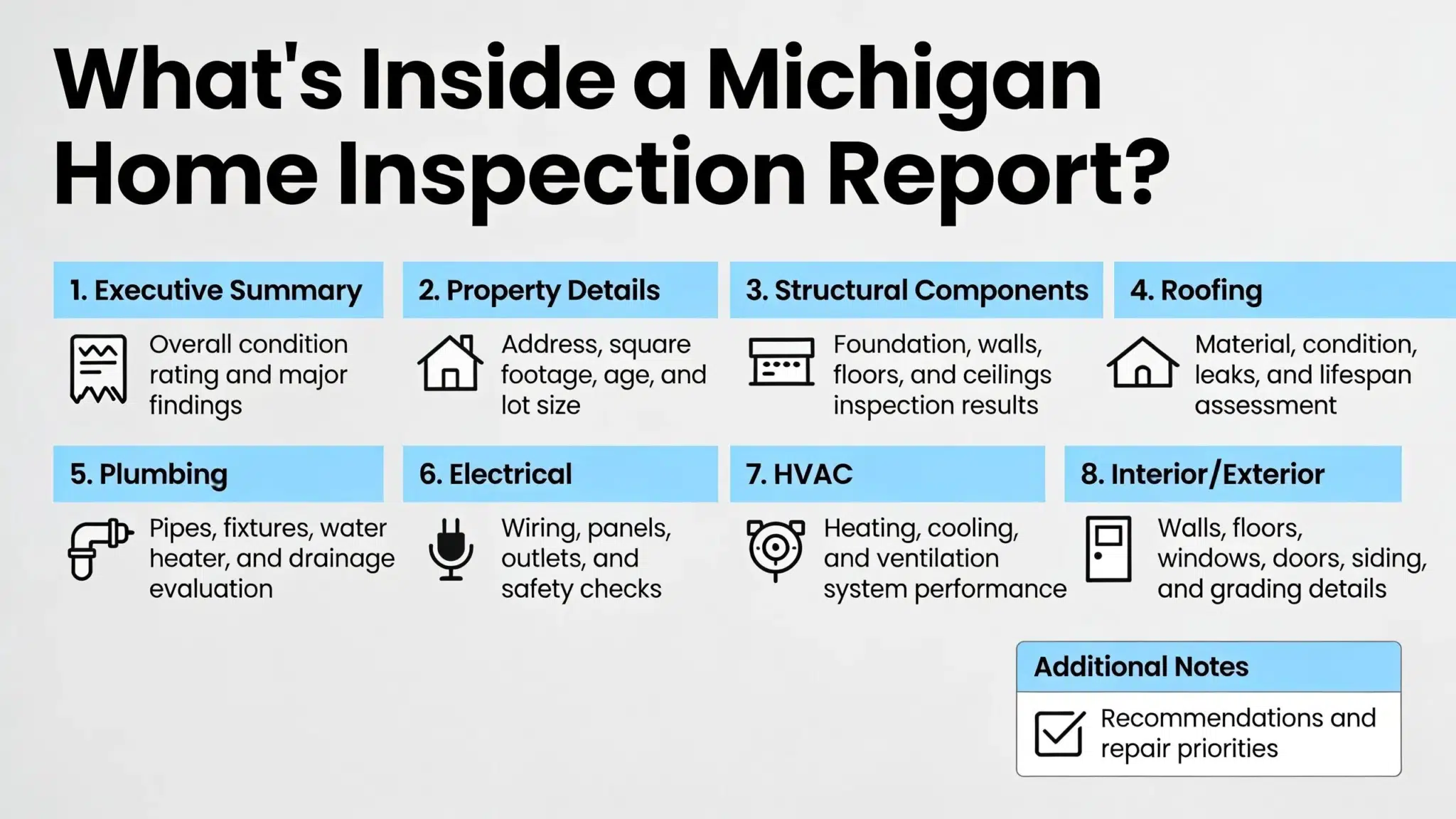
What’s Inside a Michigan Home Inspection Report?
A thorough inspection report is organized by building system, not by severity or location. The inspector walks through the home methodically, documents what was observed, and reports on each major component in sequence. InterNACHI-certified inspectors in Michigan follow a consistent standards-of-practice framework, which means a quality report covers the same core categories every time. That predictability is useful: once you know the structure, you can flip directly to the section you care about most.
The major systems every report should cover
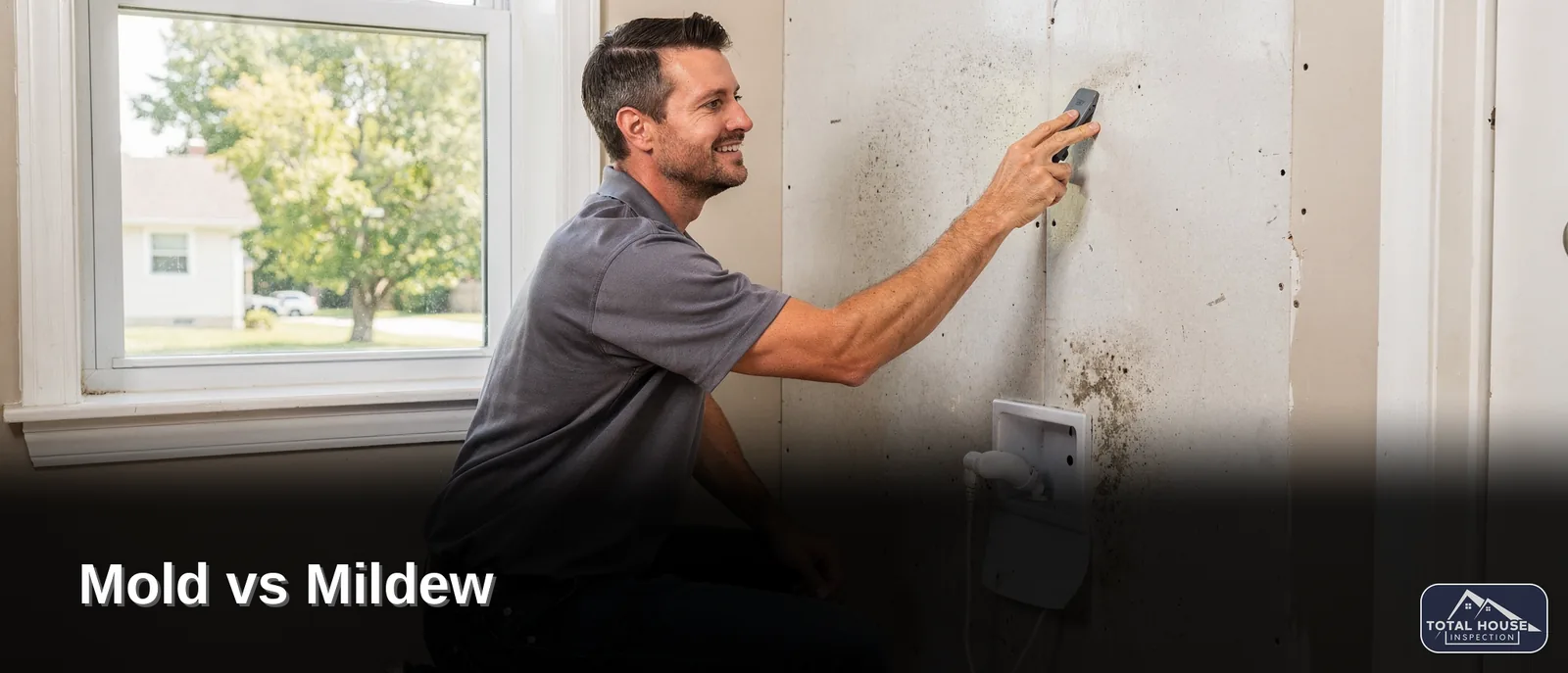
Expect the report to include sections for exterior and foundation, roof and attic, heating and cooling (HVAC), plumbing, electrical, insulation, interior rooms, windows and doors, fireplace, and basement or crawl space. Each section documents the condition of the components that were observable on the day of inspection. Some items, like underground sewer lines, radon gas levels, or mold, commonly require separate add-on tests and are not part of the base report, depending on the inspector’s scope and your contract.
How the report is structured from start to finish
The typical flow starts with a summary page that flags high-priority items, followed by the full section-by-section findings, with photos linked to specific observations throughout. Many buyers start with the summary page, and that’s understandable. But reading only the summary is a mistake. Context matters: a finding listed as “deficient” means something very different depending on where it sits in the report and what surrounds it.
How to read an inspection report (Michigan buyers): labels, photos, and what they mean
The report is not a test you need to pass. It’s a documented snapshot of the home’s condition on a specific day. No home is perfect, and the goal of the inspection is not to find one. The goal is to understand what you’re buying before you’re legally committed to it. Inspectors use standardized condition labels to make the findings easier to interpret: inspected, not inspected, not present, and deficient. Most flagged items fall under “deficient,” which means something is not performing as intended or presents a concern worth noting.
What "deficient," "monitor," and "safety concern" actually mean
Deficient means something isn’t functioning correctly, is damaged, or is improperly installed. It needs repair, replacement, or further evaluation. Monitor means the condition isn’t urgent but should be watched over time, because it may worsen. Safety concern means the issue poses a direct risk to occupants. Inspectors typically flag safety concerns as highest priority and recommend they be addressed before occupancy or closing. Understanding these three labels turns the report from an anxiety-inducing document into a clear action list.
Understanding photos and annotations in the report
Good reports attach photos directly to each finding, not bundled at the end as a separate gallery. When reviewing photos, look for red arrows or annotations pointing to the issue, close-up shots paired with wider context shots, and any labels the inspector added. Photos are the fastest way to gauge severity when you’re not standing in the house yourself. A water stain described in text reads differently than a photo that shows a 12-inch discolored patch with active efflorescence underneath it.
Michigan-specific issues that show up regularly in local reports
Southeast Michigan’s climate and housing stock create patterns you won’t see as often in other states. Freeze-thaw cycles hammer foundations and exterior components every winter. Many homes were built in the mid-20th century and carry the maintenance backlog that comes with age. And basement moisture issues in this region often go undetected for years before showing up in a Michigan inspection report. Knowing what to expect makes the findings less alarming when they appear.
Foundation and exterior damage from freeze-thaw cycles
Michigan winters are hard on foundations, driveways, window frames, and exterior caulking. Inspectors commonly flag cracked mortar joints, efflorescence on basement walls, and deteriorating window sills. These findings don’t always indicate structural failure, but they do indicate deferred maintenance, sometimes over a long period. Severity depends on whether water is actively getting in, not just whether cracks are visible. A hairline crack in a poured concrete wall reads very differently than a bowing block wall with horizontal cracking.
Basement moisture and radon: two concerns that appear often in Michigan inspection reports
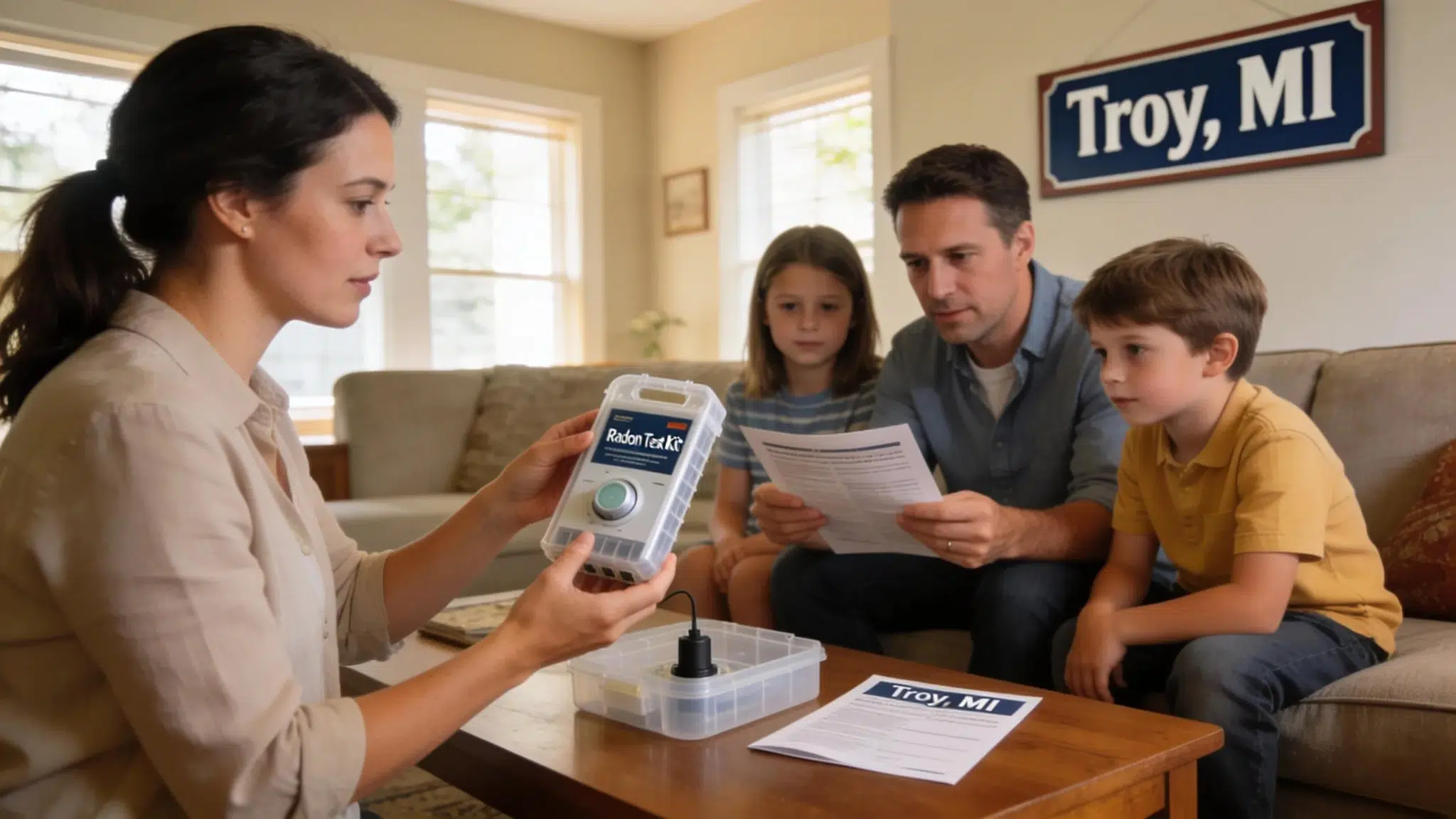
A basement moisture inspection is among the most frequently documented parts of an inspection in older Michigan homes. Inspectors look for staining on walls and floors, musty odors, sump pump condition, and grading issues around the foundation perimeter that direct water toward the house rather than away from it. Radon is a separate issue entirely. It’s a naturally occurring gas that seeps through soil and accumulates in the lower levels of homes, and Michigan has elevated radon risk in several counties, including Lenawee, Hillsdale, Branch, and Livingston. Radon testing Michigan buyers request as an add-on to the standard inspection is relatively inexpensive compared to the cost of mitigation, making it one of the more practical decisions a buyer can make before closing.
Critical findings vs. maintenance items: knowing the difference
Not all findings carry equal weight, and treating them as if they do is how buyers end up either panicking over a missing outlet cover or overlooking a failing furnace. The inspection report doesn’t rank findings by dollar amount. That’s your job after you’ve read it carefully. The two categories that actually drive decisions are safety and life-safety items on one side, and deferred maintenance items on the other.
Safety issues that need attention before you move in
These findings are non-negotiable. Improper electrical wiring, missing GFCI protection in wet areas, inoperable smoke detectors, carbon monoxide concerns, and cracked heat exchangers in furnaces all fall into this category. They either get fixed before closing or they become part of your repair negotiation. A thorough inspector will call these out clearly, in plain language, rather than burying them midway through a long section on a system with minor issues.
Maintenance findings that affect your negotiating position
Worn roof shingles, aging water heaters, minor grading issues, and deteriorated caulking around windows and doors all show up in almost every Michigan home inspection report. They rarely kill a deal on their own. But they tell you a lot about how the home was maintained over time. Use maintenance findings to assess whether the listing price reflects the home’s true condition, not just its fresh paint and updated kitchen countertops.
What a modern digital inspection report looks like
Ten years ago, an inspection report was a printed packet handed to you at the end of a walkthrough. Today, the best inspectors deliver a web-based digital report you can open on your phone, share with your agent instantly, and revisit any time you need to. The format matters because clarity and speed both matter when you’re working inside a transaction with tight deadlines and competing interests.
How web-based reports make findings easier to act on
A digital report isn’t just a PDF. It’s an interactive document where photos sit directly next to the findings they document, recommendations are written in plain English, and the summary is a true priority list. At Total House Inspection, we aim to deliver this format to every client within 24 hours of the inspection. That turnaround gives buyers and agents enough time to review findings carefully before the inspection contingency window closes, which means fewer rushed decisions and fewer surprises at the table.
What to look for in a quality report regardless of who inspected
Every finding in a quality report should identify the issue, explain why it matters, include a supporting photo, and give a clear recommendation: repair, replace, or consult a specialist. If the report lists items without explaining the practical significance of each one, it isn’t doing its job. The writing should be direct enough that you don’t need a contractor on the phone to understand what you’re reading before your contingency deadline.
What to do with your inspection findings before you close
The inspection report is not the end of the process. It’s the beginning of your decision. Once you’ve read the report and sorted findings into safety issues and maintenance items, you have three options: request repairs, negotiate a price reduction or closing credit, or walk away if the scope of problems is larger than the deal can support. Most transactions settle somewhere in the first two options.
How to use the report in repair negotiations
Focus repair requests on safety items and major deficiencies, not cosmetic issues or routine maintenance. Sellers are far more likely to negotiate on findings that represent real liability or financing risk. Work with your agent to turn specific findings from the inspection report into a formal repair request or credit ask, backed by the inspector’s documentation and, where possible, a contractor estimate that gives the request a real number to work from.
When to bring in a specialist for further evaluation
Some findings warrant a follow-up from a licensed specialist before you close. Structural engineers, HVAC technicians, and licensed electricians all appear as referrals in inspection reports when the inspector observes something beyond the scope of a general inspection. Take those referrals seriously. The cost of a specialist evaluation is small relative to the cost of discovering a serious problem after the deed transfers.
The report is a tool, not a verdict

A Michigan home inspection report is only useful if you know how to read it. The document is detailed by design. It’s meant to give you the full picture, not a filtered summary. Start with the summary page, then dig into the sections that flag deficiencies. Pay closest attention to safety items and big-ticket systems like the roof, HVAC, electrical, and foundation.
Use the findings to make an informed decision, not an emotional one. A long report doesn’t mean a bad house, and a short report doesn’t mean a clean one. What matters is the severity of what’s flagged and how those findings compare to the price you’re paying.
Read the whole inspection report in Michigan, not just the summary. Ask your inspector questions directly. Let the findings, not anxiety, drive your next step.
Total House Inspection delivers clear, photo-rich digital reports to help you make confident decisions before you close. Get in touch with our team to schedule your inspection or learn more about what our reports include.
Frequently asked questions about Michigan home inspection reports
How long does it take to receive my inspection report in Michigan?
Turnaround times vary by inspector. Some inspectors, including Total House Inspection, aim to deliver reports within 24 hours of the inspection so buyers have adequate time to review findings before their contingency deadline passes.
Does a Michigan home inspection report include radon testing?
Standard home inspections do not include radon testing. Radon testing is typically offered as a separate add-on service. Given Michigan’s elevated radon risk in counties like Lenawee, Hillsdale, Branch, and Livingston, adding a radon test is a practical step for most buyers.
How many pages is a typical inspection report in Michigan?
Report length varies based on the size of the home, its age, and the number of findings. Expect a detailed report to run many pages with photos, annotations, and section-by-section documentation, longer for older homes with more deferred maintenance.
What is the difference between a "deficient" and a "safety concern" label in an inspection report?
“Deficient” means something isn’t working correctly or is improperly installed and needs attention. “Safety concern” means the issue poses a direct risk to occupants and should typically be addressed before closing or occupancy. Both require action, but safety concerns carry greater urgency.
Can I use my inspection report to negotiate the purchase price?
Yes. Documented findings from your inspection report in Michigan can support a formal repair request or a credit negotiation at closing. Focus on safety items and major deficiencies rather than routine maintenance, and back your request with contractor estimates where possible.
Does a Michigan home inspection cover mold or sewer lines?
Standard home inspections are visual and do not typically include mold testing or sewer line inspections. These commonly require separate specialist services. If you have reason to suspect a problem, such as musty odors or an older cast-iron sewer line, ask your inspector about available add-on services before the inspection date.