Most home buyers have two questions before inspection day: how long does a home inspection take, and what does it cover? Neither question deserves a vague “it depends.” Both have clear, honest answers, and you deserve to walk into inspection day knowing exactly what to expect.
At Total House Inspection, a certified inspection team serving southeast Michigan, these two questions come up on nearly every booking call, and that’s a good thing. It means buyers want to be prepared, not just present. This article draws on field experience from inspections across the region. You’ll get realistic time ranges by home size and condition, a system-by-system breakdown of what gets checked, a clear look at what falls outside standard scope, and a straightforward explanation of what happens after the inspector leaves.
How Long Does a Home Inspection Take and What Does It Cover?
For most single-family homes, the inspector will be on-site between two and four hours. That range narrows quickly once you factor in square footage, age, and condition. Size is the primary driver, but it’s not the only one.
Size sets the baseline
A compact home under 1,500 square feet typically wraps up in one to two hours. An average home between 1,500 and 2,500 square feet runs two to three hours. Larger homes above 2,500 square feet push into the three-to-five-hour range, and anything above 4,000 square feet can run longer depending on complexity. The logic is straightforward: more square footage means more rooms, more surfaces, and more systems to document. A good inspector isn’t rushing through any of it.
Age and condition stretch the clock
Older homes take more time, full stop. Inspectors working through a 1960s ranch are looking at wiring that may predate modern safety standards, plumbing that could include galvanized steel pipes well past their service life, and structural components that have had decades to shift, settle, or deteriorate. Every deficiency found requires documentation, notes, and photos, and older homes tend to have more of them. A poorly maintained home of any age behaves the same way: more problems mean more time on site. A newer, well-kept home of the same square footage will consistently land at the lower end of the time range.
Outbuildings are their own inspection zones
Detached garages, guest houses, sheds with electrical, pools, and similar structures all get inspected separately. They are not afterthoughts folded into the main walkthrough. Each one adds time proportionally, so buyers scheduling inspections on properties with multiple structures should communicate that upfront so the calendar is blocked appropriately. A main house plus a large detached garage can add a half hour or more to the total on-site time, depending on size and complexity.
What a Home Inspector Checks: A System-by-System Breakdown
The reason a thorough inspection takes several hours is because a qualified inspector covers a substantial amount of ground. This section lays out exactly what that looks like, broken into logical groupings so you can follow along mentally on inspection day, and understand what your home inspection checklist actually includes.
Structural components and exterior
The inspection starts before the inspector ever steps through the front door. On the exterior, the roof gets a close evaluation: shingles, flashing, gutters, soffits, fascia, vents, and the chimney. The foundation is examined for visible cracks, settling, moisture intrusion, and bowing walls. Exterior siding, trim, decks, porches, grading, and drainage all get documented. Windows and doors are checked for condition, function, and sealing. These aren’t visual glances. The inspector is identifying deficiencies, assessing severity, and building the written record that will follow the report home with you.
Electrical, plumbing, and HVAC
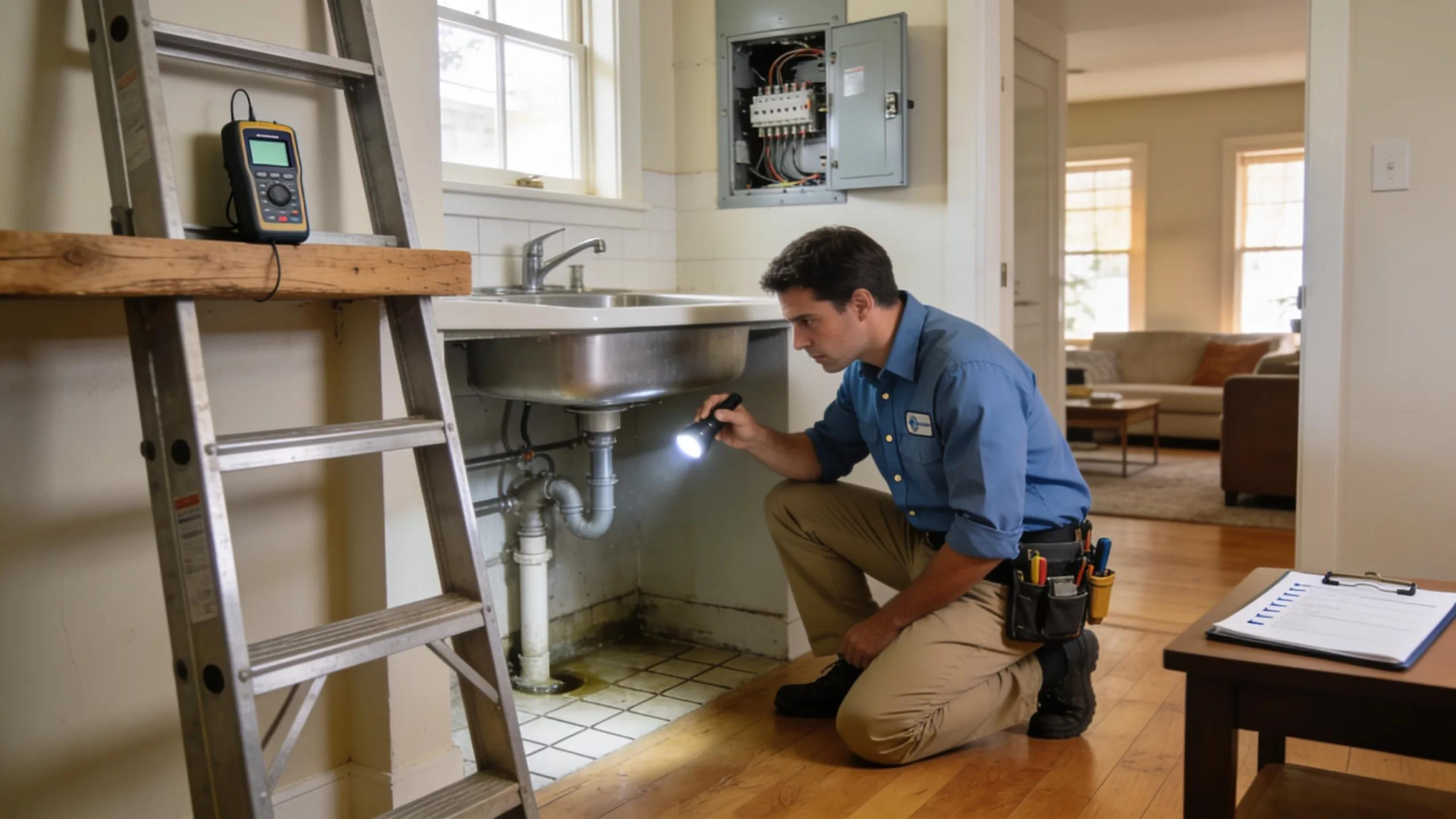
This is where the technical depth of a standard home inspection becomes clear. The electrical evaluation covers the service panel, breakers, visible wiring, outlets, switches, grounding, and any signs of unsafe or outdated conditions. Plumbing inspection includes visible supply and drain lines, fixtures, water pressure, the water heater, and signs of corrosion or active leaks. HVAC covers heating and cooling equipment, ductwork, vents, the thermostat, and filter condition. These three systems interact with every room in the home, so they get evaluated throughout the inspection rather than checked off in a single location and forgotten.
Attic, basement, living spaces, and safety items
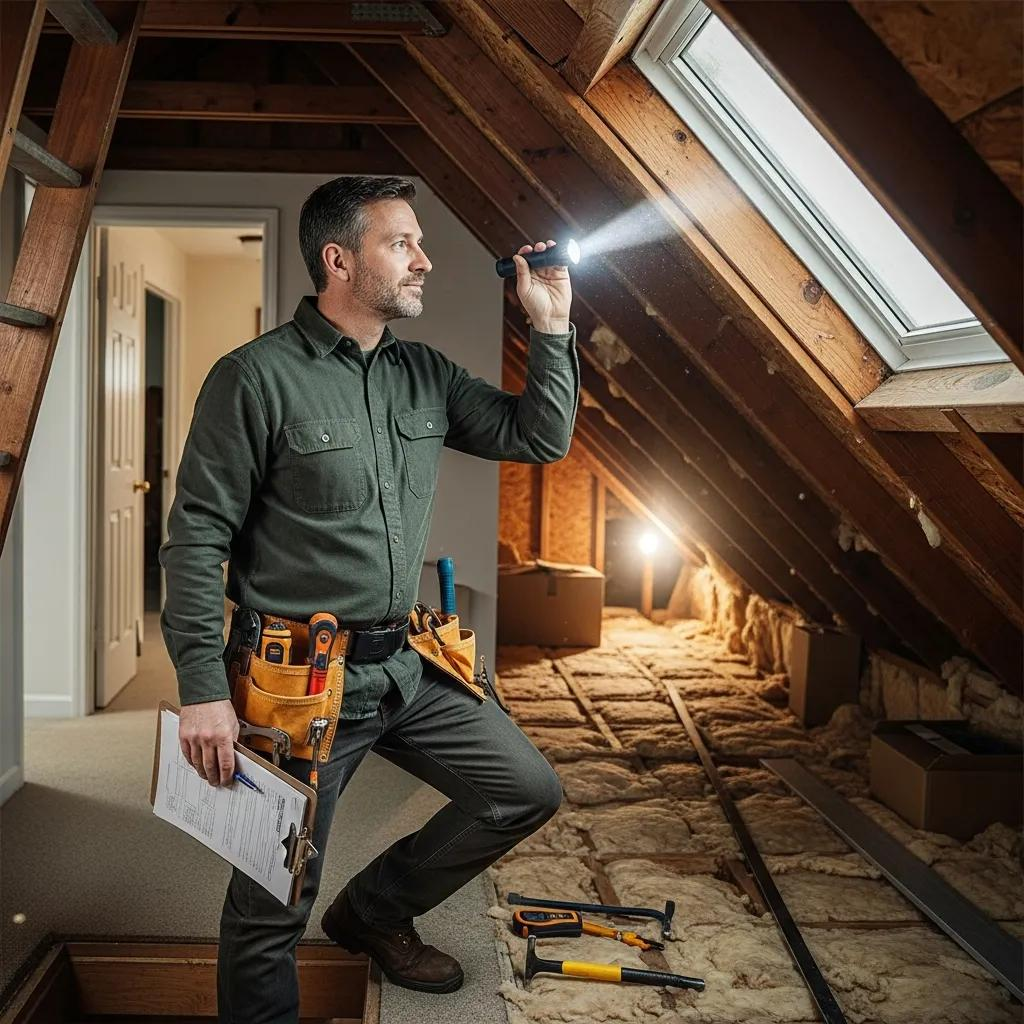
The attic gets checked for insulation, ventilation, roof framing, and any signs of moisture, mold, or pest activity. The basement or crawlspace is evaluated for moisture, standing water, structural conditions, and ventilation. Interior living spaces cover walls, ceilings, floors, stairs, and any visible signs of water damage or structural movement. Built-in appliances that come with the home are tested for basic function. Safety items round out the inspection: smoke detectors, carbon monoxide detectors, handrail integrity, and garage door reversal function all get verified. By the time the inspector wraps up, the home inspection checklist has touched hundreds of individual components across every major system.
What a Standard Inspection Doesn't Cover
A standard inspection is thorough, but it operates within a defined scope. Knowing those limits matters because buyers who assume a clean inspection report means a property is entirely problem-free sometimes get surprised later.
Common exclusions that catch buyers off guard
A standard home inspection does not cover pest or termite activity, mold presence or air quality testing, radon or other airborne hazards, the condition of underground sewer lines or septic systems, asbestos or other environmental hazards, code compliance or permit history, or system sizing and efficiency ratings. The underlying reason for most of these exclusions is consistent: they either require specialized equipment, lab testing, or licensed professionals operating outside standard inspection scope, or they involve areas that aren’t readily accessible during a visual walkthrough.
When specialty inspections are worth adding
Think of specialty inspections as targeted tools for specific risk factors, not optional add-ons for anxious buyers. An older home with large trees in the yard warrants a sewer scope. Any purchase where radon exposure is a realistic concern warrants a radon test. A home with signs of water intrusion, musty odors, or any history of flooding warrants mold testing. An active fireplace or wood stove warrants a chimney inspection. An older home built before the late 1970s or early 1980s where renovation is planned warrants an asbestos assessment. Matching the right specialty inspection to the right property is smart due diligence, not paranoia.
Add-On Services and How They Affect Your Inspection Schedule
Most specialty inspections can run alongside or immediately after the standard inspection, which keeps everything contained in a single property visit. That said, some add-ons have different timelines: radon testing, for example, requires the monitor to remain in place for roughly 48 hours before results are finalized, even though placing it takes only a few minutes on inspection day.
Time impact of common add-ons
Radon testing involves placing a passive or continuous monitor during the inspection, so the on-site time impact is minimal, but results take 48 hours to finalize. A sewer scope camera inspection of the main line adds roughly 30 to 45 minutes on site. Mold testing through surface sampling or air quality collection is typically a brief sample-collection activity, though time varies by property size and the number of samples needed. Thermal imaging with an infrared scan of walls, ceilings, and electrical panels can add anywhere from 30 minutes to over an hour depending on home size. None of these additions are trivial in terms of information value, but the on-site time impact is manageable when they’re planned from the start.
One visit instead of a scheduling puzzle
Coordinating multiple vendors for multiple specialty inspections during a compressed transaction window can cost buyers two or three days they often don’t have. Total House Inspection offers standard inspections alongside radon testing, sewer scope, mold testing, and thermal imaging, all bookable through a single scheduling call or our 24/7 online system, with weekend availability included. Buyers book once and show up once, which matters when contract deadlines aren’t flexible.
Your Report: When It Arrives and What to Do With It

The on-site inspection ends, but the work isn’t finished. What happens between the inspector leaving the property and the buyer sitting down to review findings is just as important as the inspection itself.
Delivery timeline and format
The home inspection report timeline is straightforward: most inspectors deliver the written report within 24 to 48 hours of the on-site visit, and many aim for same-day or next-business-day delivery. The report arrives as a digital PDF by email or through an online reporting portal, with photos documenting every deficiency noted during the walkthrough. While some inspectors offer a brief on-site overview before leaving, don’t rely on that conversation as the official record. The written report is what drives repair requests and negotiations, it deserves a careful read before any of those conversations happen.
How to read the report and act on findings
Start by separating the report into two categories: safety concerns and major system issues on one side, cosmetic items and deferred maintenance on the other. The first category drives repair requests and negotiation conversations with your agent. The second gives you a realistic picture of what you’re buying and what will need attention over time. Keep the report on file regardless of what happens with the transaction. It is a detailed record of the home’s condition at a specific point in time, and that record has value well beyond the closing table.
Walk Into Inspection Day Knowing What You Signed Up For
So, how long does a home inspection take, and what does it cover? For an average single-family home, expect two to three hours on site, coverage of hundreds of components across every major system, and a written report in your inbox within 24 to 48 hours. Larger, older, or more complex properties take longer, and add-on services extend the schedule proportionally, but always for a clear reason. Understanding the full scope before you show up makes you a sharper buyer and a more confident negotiator when the report arrives.
The inspection is not a formality. It is the most detailed, objective look at a property you will get before closing, and knowing what it covers versus what it does not is the difference between informed decision-making and guesswork.
Buyers in southeast Michigan, including the greater Detroit area and Oakland County, who want a thorough inspection with no corners cut and no scheduling headaches can book with Total House Inspection any time through our 24/7 online system. If you want a straight answer on how long your specific home inspection will take and exactly what it covers, reach out before your next closing date. We’ll give you a direct answer.
Frequently Asked Questions
How long does a home inspection take and what does it cover?
A standard home inspection takes two to three hours for an average single-family home, covering structural components, exterior, electrical, plumbing, HVAC, attic, basement, interior living spaces, and safety systems. Larger or older homes can run three to five hours or more. The written report, which documents every finding with photos, typically arrives within 24 to 48 hours of the on-site visit.
What does a home inspector check that most buyers don't expect?
Inspectors check built-in appliances, garage door reversal function, smoke and carbon monoxide detectors, grading and drainage around the foundation, and chimney flashing, items buyers often overlook. They do not test for radon, mold, or pests; those require separate specialty inspections.
Does adding specialty inspections mean scheduling a second visit?
Not necessarily. Many add-on services, such as sewer scope, thermal imaging, and radon monitor placement, can be done during the same property visit as the standard inspection. Radon results still take 48 hours to finalize, but the inspector places the monitor on the same day.