By Dan Joandrea, Total House Inspection Inc.
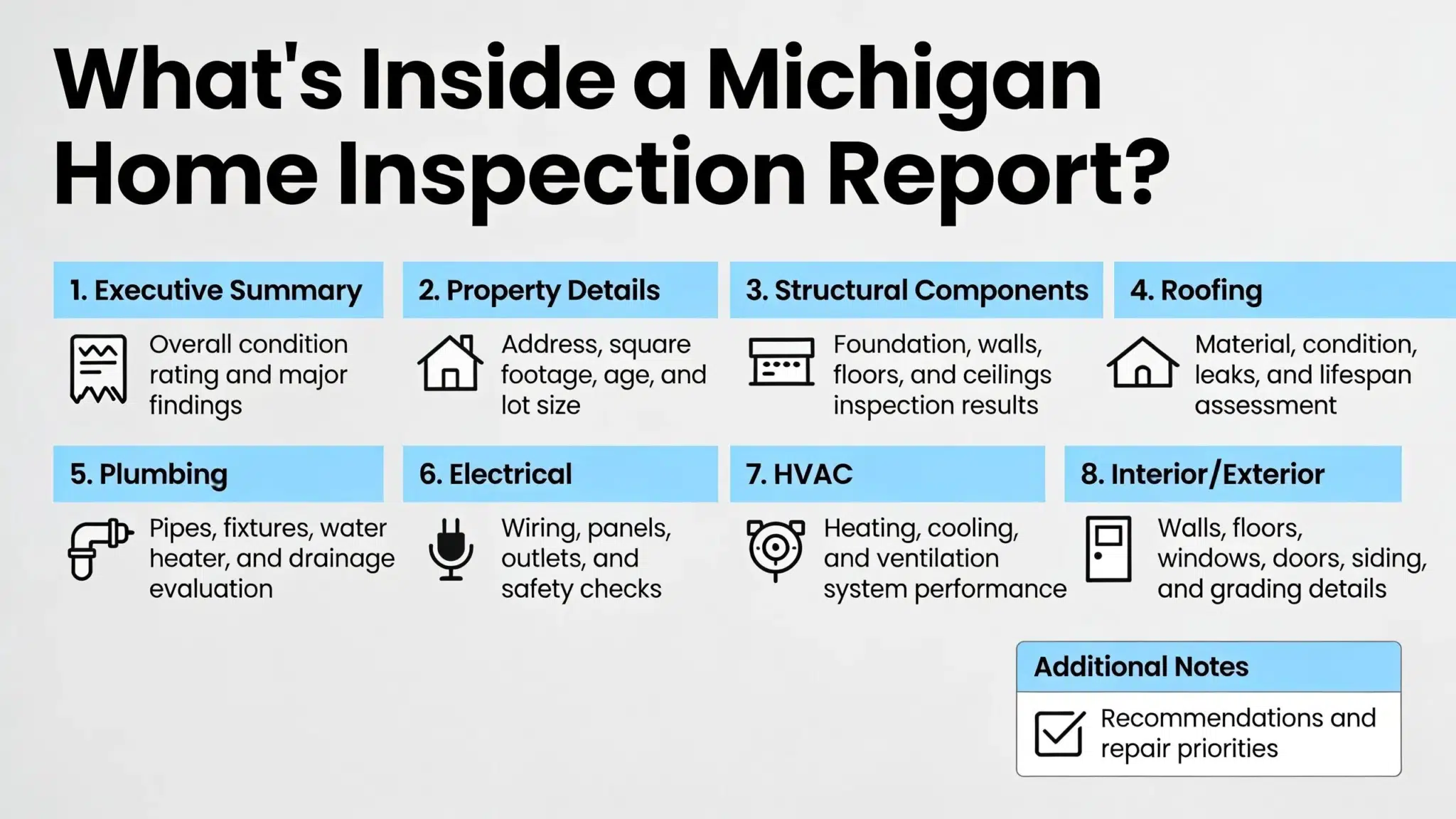
A standard Michigan home inspection is a non-invasive, visual evaluation of a home’s readily accessible systems and components — typically covering the roof, structure and foundation, exterior, basement and crawl space, plumbing, electrical, heating and cooling (HVAC), insulation and ventilation, interior, and built-in appliances. Following the InterNACHI or ASHI Standards of Practice, a certified inspector documents the condition of each area in a written report, usually delivered within 24–48 hours. In Michigan, inspectors pay special attention to freeze-thaw foundation damage, basement moisture, roof stress from snow and ice, and radon — a gas found at elevated levels in roughly 1 in 8 Michigan homes. Most single-family inspections take 2–4 hours and cost about $350–$550.
Most people hear “home inspection” and picture someone wandering around with a clipboard. What actually happens is far more structured. A qualified inspector works through a detailed checklist covering the parts of the home that affect safety, function, and long-term cost — not just what’s easy to see.
If you don’t know what’s on that list, it’s easy to feel out of the loop when the report lands. This guide walks through exactly what a standard Michigan home inspection checklist includes, what it leaves out, what it costs, and how to read the results — so you can buy (or sell) with confidence.
What Is a Home Inspection? (And What It Is Not)
A home inspection is a visual, non-invasive assessment of a home’s physical condition at a single point in time. The inspector evaluates the systems and components that are safely and readily accessible, then reports what’s working, what’s near the end of its life, and what needs repair or further evaluation by a specialist.
A home inspection is not:
- An appraisal. It measures condition, not market value.
- A code-compliance inspection. Inspectors flag safety concerns, but they don’t certify that a home meets current building code.
- A guarantee or warranty. It reflects what was observable on inspection day, not hidden or future defects.
- A pass/fail test. No home “fails.” The report simply describes the property so you can make an informed decision.
According to the American Society of Home Inspectors (ASHI), a professional inspection brings trust and transparency to the home-buying process by giving buyers an objective picture of what they’re actually purchasing.
Why the Inspector’s Credentials Matter More in Michigan
Here’s something most Michigan buyers don’t know: Michigan does not license home inspectors. According to ASHI’s state regulations database, there is currently no state regulation of home inspection licensing in Michigan — no required pre-licensing education, no mandated field training, and no continuing-education requirement.
That means the quality bar is set entirely by the inspector’s own certification and standards, not the state. It’s why hiring a certified inspector matters so much here. Look for credentials from:
- InterNACHI (International Association of Certified Home Inspectors) — Certified Professional Inspector (CPI)
- ASHI (American Society of Home Inspectors)
Certified inspectors agree to follow a published Standard of Practice and a code of ethics that define exactly what must be inspected and reported. Total House Inspection’s team is InterNACHI (NACHI) Certified, which is your assurance that the checklist below is applied consistently on every job.
What Makes a Michigan Home Inspection Different
Michigan’s climate and housing stock create specific risks a good local inspector watches for:
- Freeze-thaw cycles that crack foundations, driveways, and masonry
- Heavy snow and ice loads that stress roofs and cause ice dams
- Basement and crawl-space moisture, common in a state surrounded by the Great Lakes
- Older housing stock in many Southeast Michigan communities, with aging wiring, plumbing, and furnaces
- Radon, a naturally occurring radioactive gas. Michigan’s Department of Environment, Great Lakes, and Energy (EGLE) reports that elevated radon has been found in all 83 Michigan counties, with roughly 1 in 8 homes above the EPA action level of 4 pCi/L.
Because of these factors, a Michigan inspector pays extra attention to structural integrity, insulation, drainage, and water intrusion.

How Much Does a Home Inspection Cost in Michigan?
For a standard single-family home, expect roughly $300 to $500, with most Metro Detroit inspections landing around $300–$400. Price depends on the home’s size, age, and location, plus any specialized add-on testing.
|
Inspection type |
Typical Michigan price range |
Notes |
|---|---|---|
|
Standard single-family home |
$350 – $550 |
Varies by square footage and age |
|
Condo / small home (<1,000 sq ft) |
$325 – $425 |
Fewer systems to evaluate |
|
Large home (3,000+ sq ft) |
$550 – $650+ |
More time, more components |
|
Radon testing (add-on) |
$175 – $350 |
Recommended statewide |
|
Mold testing (add-on) |
$150 – $499 |
Air/surface sampling |
|
Sewer scope (add-on) |
$175 – $300 |
Camera inspection of the lateral line |
Prices are typical market ranges for 2026 and vary by provider. See Total House Inspection’s current inspection fees for exact pricing.
A few hundred dollars up front routinely uncovers issues worth thousands in negotiation — or saves you from buying a money pit entirely.
What to Expect on Inspection Day
A typical single-family inspection takes 2 to 4 hours, depending on the home’s size and condition. Here’s the general flow:
- The inspector arrives and walks the exterior — roof, siding, grading, and drainage first.
- They move inside system by system, testing what can be safely operated.
- You’re encouraged to attend. Following the inspector gives you context no written report can fully capture.
- A written report follows, usually within 24–48 hours, with photos, descriptions, and prioritized findings. Total House Inspection backs this with a 48-hour report guarantee.
The Standard Michigan Home Inspection Checklist
Below is what a certified inspector evaluates in a standard inspection, area by area, with the Michigan-specific concerns called out.
1. Structural Components
One of the most important parts of the inspection. The inspector evaluates:
- Foundation condition
- Walls and ceilings
- Floors and framing
- Signs of cracks, bowing, or shifting
Michigan note: Freeze-thaw cycles are a leading cause of foundation cracks here, so structural evaluation gets extra scrutiny — especially in older homes and those with poor drainage.
2. Roofing System
Your roof is the home’s first line of defense against the elements. The checklist covers:
- Shingles and roofing materials
- Flashing and seals
- Gutters and downspouts
- Visible signs of leaks or water damage
Michigan note: Heavy snow, ice, and repeated freeze-thaw put unusual stress on Michigan roofs and can trigger ice dams, making this one of the most consequential areas to inspect.
3. Exterior
The exterior protects everything inside. Inspectors look at:
- Siding and paint condition
- Windows and doors
- Grading and drainage
- Driveways and walkways
Michigan note: Proper grading and drainage are critical for keeping snowmelt and rain from seeping into basements — a top source of costly water damage in the region.
4. Plumbing System
Plumbing problems get expensive fast if missed. Inspectors check:
- Water supply lines and visible pipes
- Water heater age and condition
- Faucets, fixtures, and functional drainage
- Signs of leaks or corrosion
Michigan note: Cold snaps can freeze and burst pipes, so inspectors pay close attention to pipe insulation and vulnerable runs in unconditioned spaces.
5. Electrical System
Safety is the priority here. The inspector evaluates:
- Service panel and breakers
- Visible wiring condition
- Outlets and switches (including GFCI/AFCI protection where expected)
- Grounding and bonding
Michigan note: Older Southeast Michigan homes may still have outdated or hazardous wiring (such as knob-and-tube or aluminum), which the inspector will flag for evaluation.
6. Heating & Cooling (HVAC)
With Michigan winters, a reliable heating system isn’t optional. Inspectors examine:
- Furnace or boiler condition and age
- Air-conditioning equipment
- Thermostat operation
- Ductwork and ventilation
The U.S. Department of Energy notes that proper HVAC maintenance directly improves efficiency and safety — and heating equipment often tops the list of big-ticket replacements in older homes.
7. Insulation & Ventilation
Especially important in Michigan’s climate. The inspector looks for:
- Attic insulation levels
- Air leaks
- Ventilation in attics and crawl spaces
- Moisture buildup
Michigan note: Good insulation and ventilation reduce heating costs and help prevent the ice dams that damage roofs and gutters each winter.
8. Basement & Crawl Spaces
Many Michigan homes have basements, which are prone to moisture. The checklist includes:
- Signs of water intrusion
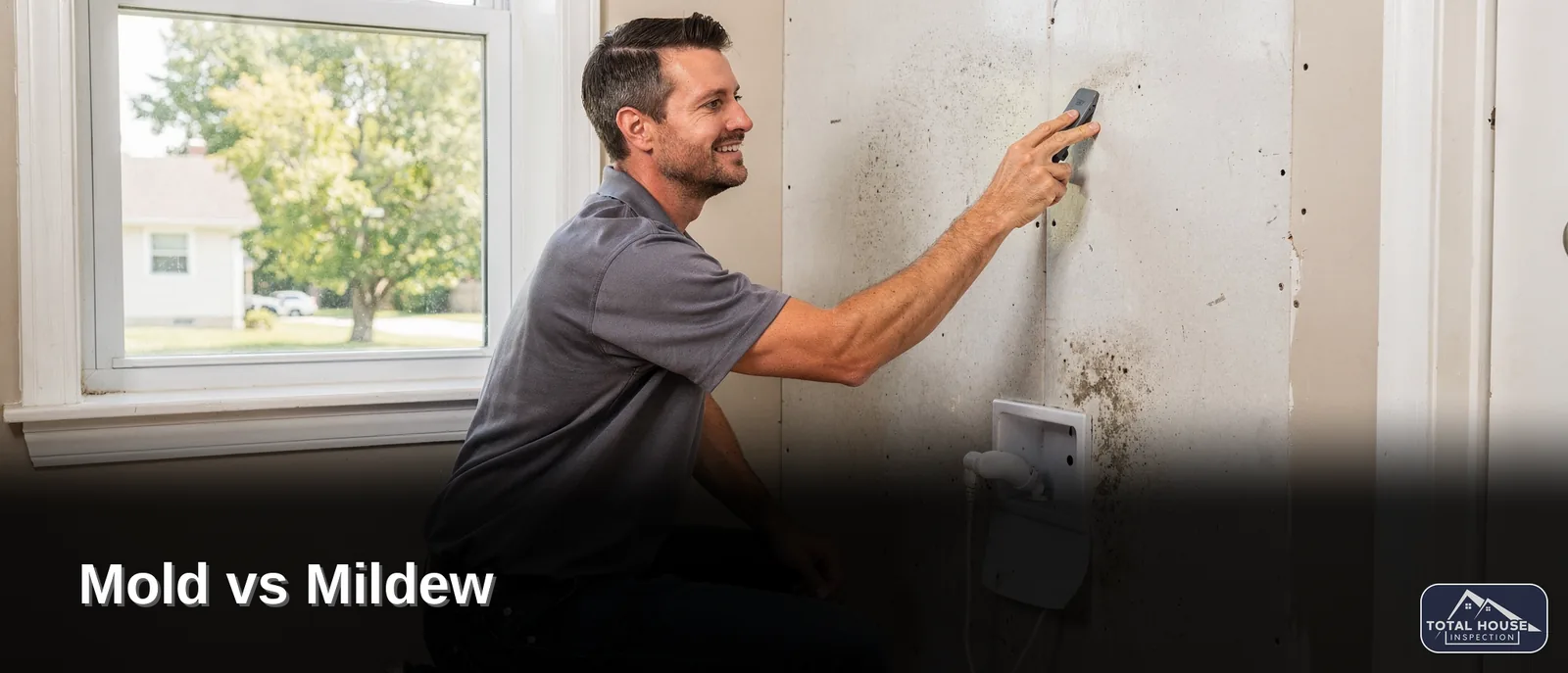
- Visible mold or mildew
- Foundation cracks
- Sump pump presence and function
Michigan note: Basements are often where hidden problems surface first. A working sump pump is a genuine asset in a state with a high water table in many areas.
9. Interior Components
Inspectors also review the inside of the home:
- Walls, ceilings, and floors
- Doors and windows
- Stairs and railings
- Cabinets and countertops
This surfaces both everyday wear and safety concerns like loose railings or trip hazards.
10. Built-In Appliances (If Included)
When appliances convey with the sale, they’re typically checked for basic function:
- Oven and stove
- Dishwasher
- Built-in microwave
- Garbage disposal
The goal is to confirm each unit operates as intended on inspection day.
What’s Not Included in a Standard Inspection
Knowing the limits is just as important as knowing the scope. A standard inspection generally does not cover:
- Concealed or inaccessible areas — inside finished walls, under floors, or anywhere the inspector can’t safely reach
- Radon — requires separate radon testing (strongly recommended statewide)
- Mold — requires dedicated mold testing with air or surface sampling
- Sewer lines — best evaluated with a camera-based sewer scope inspection, especially on older homes with mature trees
- Septic systems — a separate specialized inspection
- Swimming pools — covered by a pool inspection add-on
- Pest / wood-destroying organisms — often a separate service
- Code compliance, warranties, and life expectancy of every component
These are commonly bundled as add-ons. Because Michigan sits in a high-radon region, pairing radon testing with your standard inspection is one of the smartest moves a buyer can make. Always confirm exactly what’s included before you book.
Standard vs. Specialty Inspections at a Glance
|
Concern |
Covered in standard inspection? |
What to book instead |
|---|---|---|
|
Roof, structure, HVAC, plumbing, electrical |
✅ Yes |
Standard home inspection |
|
Radon gas |
❌ No |
|
|
Mold |
❌ No |
|
|
Underground sewer line |
❌ No |
|
|
Swimming pool |
❌ No |
|
|
New-build quality before closing |
Partially |
|
|
Selling and want to get ahead of issues |
N/A |
Tips for Michigan Buyers
Get the most from your inspection:
- Attend if you can. Seeing issues in person beats reading about them.
- Ask questions during the walkthrough. A good inspector will explain the “why,” not just the “what.”
- Read the full report carefully, not only the summary.
- Prioritize major systems — roof, foundation, electrical, HVAC — over cosmetic flaws.
- Don’t panic over small stuff. Every home has minor issues; the report exists to inform, not to scare.
- Add radon testing. Given Michigan’s radon profile, it’s inexpensive insurance.
Working closely with a certified home inspector in Michigan helps you focus on what truly affects safety and cost.
Frequently Asked Questions
A standard single-family home inspection usually takes 2 to 4 hours, depending on the home's size, age, and condition. Larger or older homes take longer.
Most standard single-family inspections cost about $300 to $500, with Metro Detroit typically in the $300–$400 range. Add-ons like radon, mold, or sewer scope testing cost extra.
No. Michigan has no state licensing requirement for home inspectors, so credentials matter. Choose an inspector certified by InterNACHI or ASHI, who follows a published Standard of Practice.
Radon, mold, sewer lines, septic systems, pools, and pest inspections are typically not part of a standard inspection. They're available as separate or add-on services. Inspectors also don't open finished walls or evaluate concealed areas.
It's strongly recommended. Michigan's EGLE has found elevated radon in all 83 counties, with roughly 1 in 8 homes above the EPA action level. Testing is the only way to know your home's level.
A sewer scope is recommended for most homes, especially older properties, homes with large trees nearby, or if you notice slow drains, backups, or unusual odors. It can reveal hidden problems such as cracks, blockages, root intrusion, or damaged pipes before they become expensive repairs.
No. An inspection isn't pass/fail. It's a condition report that describes the home so you can decide whether to proceed, negotiate, or request repairs.
Typically within 24 to 48 hours. Total House Inspection provides reports under a 48-hour guarantee, complete with photos and prioritized findings.
Yes, if possible. Attending lets you see issues firsthand and ask the inspector questions in context, which makes the written report far easier to act on.