By Dan Joandrea, Total House Inspection Inc.
A sewer scope inspection uses a waterproof camera to examine the main sewer line between a home and the municipal connection. It can reveal tree-root intrusion, cracks, collapsed sections, offset joints, corrosion, blockages, and low spots where wastewater collects. Most residential inspections cost approximately $200 to $300 and take 10 to 20 minutes.
The sewer line is the one major home system nobody thinks about until it stops working. When it does, the bill is not a small one. A collapsed or root-choked sewer lateral can cost anywhere from $8,000 to $25,000 to fix, and complex jobs with deep lines and driveway restoration push well beyond that. Here’s the problem: a standard home inspection won’t catch it. The inspector checks what’s accessible and visible. Underground pipe walls aren’t.
A sewer scope inspection fills that gap. It sends a waterproof camera through the main sewer line so an inspector can see exactly what’s happening inside the pipe before the buyer signs anything. That information can shape a negotiation, justify walking away, or simply let you close with confidence. Some inspection companies, Total House Inspection included, offer sewer video inspections as part of a bundled package so buyers can cover both in a single scheduled visit. That matters more than it sounds.
By the end of this article, you’ll know what the camera actually finds, what repairs cost, what the inspection itself runs, and when ordering one is the right call.
What a sewer scope inspection actually is
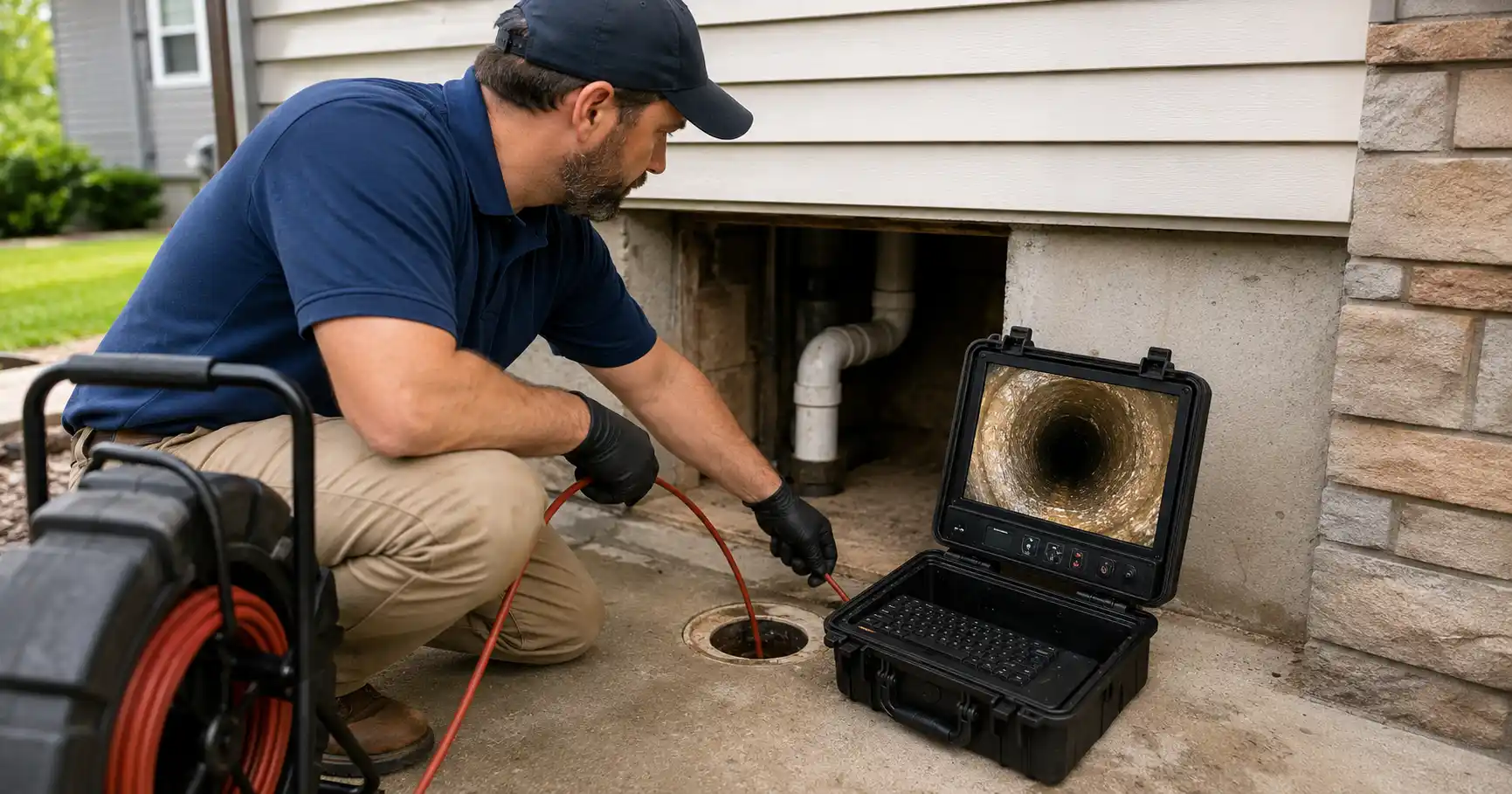
A sewer scope inspection is a visual examination of the sewer lateral using a waterproof camera mounted on a flexible cable. The inspector feeds the camera through the line from a cleanout or access point while watching a live feed on a monitor. It’s not a pressure test, not a chemical analysis, and not an evaluation of the soil around the pipe. It is a visual inspection of what’s inside the pipe, nothing more and nothing less.
The camera travels the sewer lateral from the home to the municipal connection, covering the stretch of pipe that nobody sees and nobody thinks about until something goes wrong. The inspector evaluates pipe walls, joint alignment, the overall interior condition, and whether anything is blocking or damaging the line along that run.
What the camera examines inside your pipes
During a sewer line camera inspection, the inspector looks at several specific things: the overall interior condition of the pipe, blockages from grease or non-flushable debris, structural damage including cracks and fractures, joint alignment, root intrusion at joints or cracks, low spots where wastewater pools, and signs of corrosion or scaling in older pipe materials. No other inspection method captures this information without excavation. That’s exactly the point.
What a sewer scope inspection cannot tell you
The camera sees what’s inside the pipe and only where the line is accessible. It won’t detect a leak underground without visual evidence of a crack or hole in the pipe wall, and it can miss problems hidden behind standing water, heavy debris, or sections the camera simply can’t reach. A sewer scope tells you the pipe’s condition. It does not tell you about the soil, the surrounding environment, or anything that isn’t visually apparent inside the line. Those limits don’t reduce the inspection’s value, they define it.
How the sewer video inspection process works
The inspector arrives, locates the cleanout (usually near the foundation, in the basement, or in the yard), and inserts the camera cable. The line may get a water flush first to improve visibility inside the pipe. The camera is then fed slowly through the pipe while the inspector watches the live feed, pausing at any defect to document its location by linear footage. The whole process takes about 30 to 60 minutes for a standard residential line.
From cleanout to camera run: what happens on-site
When no cleanout is accessible, the inspector may need to enter through a different access point, which adds both time and cost to the job. Once the full run is complete and all defects are documented, the camera is withdrawn and the area is left clean.
Sewer lateral camera report: what to expect
After the inspection, you should receive the full recorded video as a digital file or shareable link, still images of notable defects, a written summary describing each issue with its location by linear footage from the access point, and clear recommendations for repair, maintenance, or further evaluation. A report that says “some roots present” with no video, no images, and no location reference is not a useful report. It won’t help you negotiate a repair credit, and a contractor can’t use it to quote the work accurately.

The defects a sewer line camera commonly uncovers
Root intrusion is the most common finding in homes older than 30 years, particularly where mature trees line the property. Cracks, bellied sections, and offset joints are close behind. Each one carries a different repair path and a different price tag, so understanding exactly what the camera found is the first step toward knowing what you’re actually dealing with.
Root intrusion, pipe cracks, and structural breaks
Tree roots enter the pipe through joints or small cracks, and once inside they grow to fill the available space, eventually blocking or breaking the line entirely. Pipe cracks range from surface-level hairline damage to full structural breaks that can collapse an entire section of pipe. A collapsed or severely cracked section can’t be fixed by snaking or jetting. It needs either a structural liner installed from the inside or open excavation and full replacement.
Bellied pipes, offset joints, and corrosion
A bellied section is a low spot where the soil has settled beneath the pipe, causing wastewater and solids to pool instead of flowing toward the street. This creates persistent blockages and accelerates wear over time. Offset joints happen when sections of pipe shift out of alignment, creating a ledge that catches debris and lets roots find their way in. Corrosion and scaling are more common in older cast-iron or clay pipes and can narrow the pipe’s usable diameter enough to cause chronic slow drainage throughout the entire house.
What a sewer scope inspection costs in 2026
The national range for a standard residential sewer scope inspection is about $125 to $500, with most jobs landing between $200 and $300. Urban and coastal markets run 15 to 30 percent higher than the national average. In the Midwest, including the Michigan market, typical pricing runs about $150 to $300 for a straightforward scope with accessible cleanout access.
What makes one job cost more than another
Several factors push the price above the baseline:
- Line length: longer runs take more camera time and labor
- Cleanout availability: no accessible cleanout adds $50 to $220 for alternative entry
- Geographic market: urban areas consistently cost more than rural ones
- Report detail: full HD video with a written report costs more than a quick camera look with no documentation
- Urgency: emergency or after-hours service adds $100 to $300 to the standard rate
- Complex access: specialty equipment or difficult pipe layouts can push total cost to $400 to $700 or more
Why bundling with a home inspection is the smarter move
A sewer scope added to an existing home inspection visit typically costs $100 to $250, noticeably less than booking it as a standalone service. Total House Inspection offers sewer video inspections as part of a bundled inspection package, one scheduling call, one inspection day, and one combined report instead of two separate vendors and two separate calendars. For a buyer already coordinating a home inspection before closing, that’s the most efficient way to get both done without adding friction to an already busy process.
When to order a sewer line inspection and how to choose your inspector
A sewer line inspection for homebuyers should be standard practice for any home more than 20 years old. It’s also warranted when the home has mature trees near the property line, a history of slow drains or backups, a soggy spot in the yard with no clear cause, or a gurgling toilet. For newer construction it’s less critical, but worth considering if the neighborhood connects to older municipal infrastructure that hasn’t been updated.
Warning signs that make this inspection non-negotiable
Slow drains throughout the house, not just at one fixture, signal a main line issue rather than a localized clog. A gurgling toilet when other fixtures are running is a pressure indicator of a partial blockage or damaged vent. A wet or depressed area in the yard along the path of the sewer line suggests a leak or collapse underground. Any one of these signs warrants a sewer scope before closing, not after you’ve taken ownership of the problem.
What to look for when hiring a sewer line inspector
The inspector should use a camera that records full video, not one that only captures still images. They should deliver the footage to you as a usable file or a link you can share with a contractor. The written report should name each defect, describe it clearly, and give its location by footage from the access point. Ask whether they have direct experience scoping residential sewer laterals specifically, and whether they can explain their findings in plain language without requiring a second opinion just to interpret the report. A thorough inspector does not rush through a 60-foot line in five minutes.
The bottom line
A sewer scope inspection turns the underground section of your home from an unknown liability into a documented condition. For $200 to $300, you either close with confidence or you have the information to negotiate, request repairs, or walk away before that problem becomes your financial emergency. The video pipe inspection itself takes less than an hour on-site. The information it provides can shape one of the largest financial decisions you’ll make.
Schedule the sewer camera inspection the same day as your standard home inspection. There’s no reason to add a separate trip, a separate vendor, or a separate scheduling call when a qualified inspector can handle both at once. If you’re buying a home in southeast Michigan, Total House Inspection offers bundled home and sewer video inspections, one call, one visit, one combined report. Schedule your sewer scope inspection today and get both covered before you close.
One appointment gives you a clearer picture of both the visible home systems and the underground sewer line before closing.
Frequently asked questions about sewer scope inspections
Most residential sewer scope inspections take 30 to 60 minutes on-site from camera setup to completion. Add another 15 to 30 minutes if the inspector needs to locate or clear an alternative access point when no standard cleanout is available.
You should. A reputable inspector delivers the full recorded video as a digital file or shareable link, along with still images of any defects. If an inspector won't provide the footage, that's a red flag, you need the video to share with contractors for accurate repair quotes.
For homes under 20 years old with no symptom history, it's lower priority. That said, it's still worth ordering if the property has mature trees close to the line, connects to older municipal infrastructure, or has any record of drainage issues. The cost is low enough that the downside of skipping it is higher than the inspection fee.
Yes, and that's one of its primary uses in a home purchase. A documented sewer camera video report with footage, still images, and written defect descriptions gives you a concrete basis to request a price reduction, a repair credit, or a seller-funded repair before closing. A verbal summary with no supporting documentation won't hold up in that conversation.
They refer to the same service. "Sewer scope inspection" and "sewer camera inspection" are interchangeable terms for the same video pipe inspection process: a waterproof camera is fed through the sewer lateral to document its interior condition. Some contractors may also call it a video pipe inspection or sewer line inspection. The name varies; the process doesn't.